by Aeron Miller | Jan 26, 2011
Here is a simple meditation exercise for learning how to meditate. By practicing the simple meditation technique described below, you can gradually learn to clear your mind and become more centered. It consists of two parts:
- First you will focus on the flowing nature of unlabored, easy breathing,
- Second, enjoy a simple technique for clearing your mind.
1. Flow of Breath Technique
 When learning how to meditate, first choose a quiet place where you will not be disturbed for ten minutes or more, and be seated in a comfortable position. You may choose to sit in the traditional cross-legged posture but this is not necessary in order to gain the benefits of meditation. Allow your eyes to relax closed, or leave them open just a tiny slit, and focus your attention on your breathing.
Breathe naturally through your nostrils. Avoid trying to control the breath and focus your awareness on the sensation of the breath as it enters the body – the cool feeling in your nostrils, and the warmth as it leaves. Feel the rising and falling of your chest and abdomen, and let a steady rhythm of your breathing in and out be the object of this meditation. Concentrate on your breathing, especially the exhalation, to the exclusion of everything else.
2. Mind Clearing
You may discover your mind will be very busy with mind-chatter. At first it may seem meditating is making your mind even busier. This is an illusion; you are simply becoming more aware of how busy your mind is, ALL THE TIME.
Continue your focus on your breathing. Ignore random thoughts that may tend to clutter your mind. Let them slip away; focus on your breathing. You might imagine that the thoughts leave your mind with each exhalation.
Benefits of Meditation
Practice this for 10-20 minutes once or twice a day. You will soon notice your mind feeling clearer, not only right after you sit, but throughout the day. You may or may not notice the benefits of meditation immediately. These methods of meditation require attention – and practice. Don’t expect that you will eliminate all the mind chatter on your first or second try. Stick with this process as a daily practice and you will soon be able to evaluate it’s effects.
Though meditation may seem frustrating or a bit tiring at first, after daily practice and patience, you will find the distracting thoughts subside and eventually yield to a deep sense of restful alertness and deep relaxation. You will feel refreshed and think more clearly at the end of your meditation exercise. Similarly, as you quiet your distracting thoughts through your focus on your breath, you achieve the clarity that you so desperately crave.
Follow through
Stay with this Breath and Mind Clearing meditation exercise for a while. You will rapidly feel positive physical and emotional results with daily meditation. Allow yourself the time to enjoy this Breath and Mind Clearing meditation technique and notice a decrease in stress and the open feeling that comes to your relaxed mind.
Experience Dr. Miller’s Guided Meditation Programs
 Although one of the goals of meditation is learning how to let go and flow with your own deeper guidance, it is often very beneficial to experience guided imagery audio meditations. The voice serves as a focal point and the music masks any background noise. Excellent for learning these first steps are Rainbow Butterfly, Healing Journey, Relaxation and Inspiration, and I Am: Awakening Self-Acceptance. Visit our Online Store and see The Total Stress Relief Suite, each of the recordings there will help you learn to return to center in many ways.

by Aeron Miller | Jan 26, 2011
To Understand how to use self-hypnosis, it will be easier to first examine “hypnosis” itself.
Hypnosis: noun – A procedure in which suggestions (from the “operator,” “hypnotist,” or “guide”) are given (to a subject) during a state of focused awareness.
In other words, a hypnotic process is underway any time a person’s attention is focused and possibilities are offered for their consideration.
- “Let your body relax totally, from head to toe”
- “You will awaken feeling alert and fully rested.”
- “Picture in your mind the most relaxed, peaceful place you could imagine.”
- “Imagine you can hear your beloved grandmother’s voice.”
If your attention is focused on any of these suggestions, the phenomena of hypnosis tend to ensue. You enter a light “trance” state.
If this is done over a longer period of time, say 10 minutes, you will tend to go to a deeper level, especially if gentle music is playing in the background. And if you are listening to a talented storyteller, you can go even deeper, since you don’t have to know what suggestions to use next. The more experienced the storyteller, the more deeply you can go into the experience.
Benefits Of Self Hypnosis

What we are saying is that any experience that takes you into a relaxed or inspired state of mind by guiding your focused attention is de facto a hypnotic state, no matter what people may call it. By this definition, then, we can see quickly how television, PR agencies, political propaganda, religions, and advertising regularly make use of hypnotic processes. And obviously, it can, like any other powerful tool, be put to bad use as well as good use.
There is no mystery about how to use this tool. It’s just that most of us are denied the right to know about how to use it for our own good, while the same “powers that be” are using it to delude, mislead, and control us. The bad use is all too visible around us, so we will focus on the good uses, the positive application of the hypnotic process to produce healing, wellness, and optimal performance.
Hypnosis is widely used by physicians and psychologists in the treatment of physical, emotional, mental, and behavioral dysfunctions. In keeping with this therapeutic use of these tools, Dr. Miller has developed this definition:
Hypnosis is a process using a particular collection of tools and skills that:
-
-
- Enable a person to move in and out of various states of consciousness.
- Enable the user to guide awareness (the conscious mind).
- Are used to enhance or diminish certain patterns of thinking, feeling, behaving, believing, or relating.
- May affect the behavior of the cells of the body, the emotional state, the thoughts and images in the mind, and the belief system.
- Used properly, can facilitate healing and wholeness at every level of system.
The “Hypnotic State”
There is no one “hypnotic state;” there are, however, many different states of consciousness that can be reached through suggestion, using self-hypnosis techniques. Through the use of hypnosis, for example, the guide can lead a subject into very deeply relaxed states, states of joy, or states of extreme excitement and activity.
Therapeutic Trance States – You Are Always In Control
Generally speaking, the state of consciousness that is most useful for stress management, self-healing, and behavior change is a relaxed, accepting, quiet, inwardly focused state. This is the one usually aimed for in self-hypnosis as well since it allows deeper self-awareness, presence, and the ability to access and change physiological and behavioral patterns.
The way you achieve these states is through following a series of “suggestions,” possible ways of thinking that are offered by a guide to the subject (patient or client). An example might be to think of the most enjoyable vacation you ever had. If you begin to imagine yourself in that vacation place and even visualize the scenery around you, you will tend to enter a state of consciousness very similar to the one you had on the vacation: peaceful, happy, and relaxed.
On the other hand, you could choose not to hold that image in your mind. You have the power to think about what you want with your mind. But if you do allow yourself to follow the suggestions of the guide, you are much more likely to experience the benefits of a self-hypnosis program.
In a very real sense, then, all hypnosis is self-hypnosis.
Self-Hypnosis
The term self-hypnosis is used to refer to the situation in which a person is giving suggestions to himself or herself. To gain access to the powerful tools of self-hypnosis, you need to learn how to induce (or allow a self-hypnosis audio recording to induce) a relaxed, receptive, trusting, open state of consciousness through a series of suggestions given to yourself (autosuggestion). Dr. Miller often refers to this as the “healing state.” Next, you offer yourself specific healing suggestions designed to induce your mind and body to function in a more positive way. (Of course, this process is much easier if the instructions are learned by listening repeatedly to recorded suggestions, such as are found in our Online Store.)
“Suggestions” carry the real “payload” of the hypnotic process. These suggestions may be very simple: “As you let out that deep breath, let yourself sink deeply into the surface beneath you.” Or they may be quite complex: “Return to that memory in the third grade and relive it, this time handling the situation fearlessly, with a sense of self-confidence.” It depends on each unique situation.
A good hypnotherapist is one who is an expert at formulating suggestions that offer the mind powerful, compelling, positive images of the future, and effective ways of thinking, feeling, and behaving in certain situations.
The power of self-hypnosis can help you bring about profound change, healing and positive growth in yourself.
The Power of Your Mental State
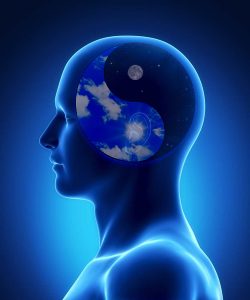 If you are like most folks, you might notice that your state of consciousness changes from day to day, and sometimes several times a day. In one moment you feel enthusiastic, and in another, bored. You might feel romantic in one moment, and in the next, very unresponsive.
Self-hypnosis programs can be used to help you change from one state of mind, or from one mood, to another. Each mood is a kind of mini-hypnotic (or hypnoidal) state. Thus there is actually no specific state that can be called truly “not hypnotic” – unless it is pure enlightenment!
For instance, imagine there’s a day when you’re feeling great, and then suddenly get really bad news: a call comes in that your stocks crashed and your life savings have just gone up in smoke. That news changes your mood, your thoughts, and what you say and do.
Next, imagine that an hour later you get another phone call informing you that the previous one was in error, that the truth is that you have just won the lottery. Presumably, there is a dramatic change in how you feel – for the better. Actually, nothing has really happened to you physically except that on both occasions, your mental image of yourself and the world changed.
If a person in a receptive trance state is told they have touched poison ivy, they can break out in a rash; if told they are naked outside on a snowy day, they shiver; if told there is an open bottle of ammonia, they can smell it. This is due to the fact that there is a direct line between the images you have in your mind and your body – hypnotic techniques simply help you use this connection to improve your life.
Of course, the kinds of suggestions offered during hypnotherapy, or that you give yourself while listening to a guided imagery audio experience, are designed to enable you to heal more rapidly, manage stress, improve your performance, change your behavior patterns, and become the person you most want to be.
Experience Dr. Miller’s Mind Tools:
Suggested Guided Imagery, Meditation & Self-Hypnosis Programs
by Aeron Miller | Jan 26, 2011
The Power Of Mind Tools
Modern medical science has proven the power of these mind tools to heal as well as prevent illness (Mind-Body Medicine). They have also been shown to empower behavior change, creativity, optimal performance, and success. They all quiet and focus the mind, then skillfully guide your thoughts, feelings, and emotions through a careful sequence of healing images and affirmations. This is why Dr. Miller calls them Software for the Mind.
Dr. Miller’s Discovery of Mind-Tools
In 1973, Dr. Miller created his first “Software for the Mind” recordings as tools to help relieve stress and its side effects. He skillfully combined the most powerful tools and techniques of hypnosis, meditation, guided imagery, prayer, and autogenic training and created a way for us to heal ourselves through following the guidance on his recordings.
As a young, idealistic physician, Dr. Miller was appalled at the degree to which medicine was failing to address the most important aspects of the human healing response. Stress can be a killer. He saw that stress and its corrosive effect on the body cause illness and slow healing. Through the release of hormones and cortisol, stress has a direct impact on all the organs of the body, including the brain and nervous system. He realized the key concept that would guide his future work: stress is the fundamental source of nearly all illnesses and suffering, it can express itself at the physical, emotional, and mental levels as well as in relationships.
He began to envision the human brain as a “biocomputer.” Our stressful reactions, anxiety, depression, bad habits, addictions, and impaired healing response are faulty “programs.” And, like any programmer, Dr. Miller realized that the true healing most of us need will not come from a bottle or a syringe. The true healing we seek must ultimately involve a change in these programs. The following are the Mind-Tools Dr. Miller has co-created to assist in this change of programming.
Read More about Software for the Mind>>
 Guided Imagery is one of the most popular mind tools used in the holistic approach to Mind-Body healing. First studied and developed by Dr. Miller in his medical practice in the 1970s, it is the integration of mind-tools from numerous disciplines and arts. Guided imagery audio enables you to use your mind to make intentional changes in your health, your behavior, your relationships, and your performance – athletic, on the stage, at work, or in creative endeavors.
Guided imagery involves the use of Selective Awareness to carefully choose your thoughts, emotions, and the images they give rise to. Imagery is the language your mind speaks and it is the ideal tool for communicating with your mind and discovering what it is telling you. By wisely guiding your imagination gradually towards an accepting, focused state of awareness, you are able to communicate more directly to your neuro-endocrine, immune, and the other organ systems of the body.
Read More about Guided Imagery>>
 Meditation, used regularly over a period of weeks or months, has been shown to help lower blood pressure and heart rate, improve breathing, relieve stress, and decrease the stress-produced chemicals (e.g., cortisol) in the body and brain. Anxiety and stress are counteracted and a generalized feeling of well-being is attained, along with a sense of deep spiritual attunement.
Originally developed thousands of years ago as part of wisdom teachings and religious practices, the meditative tools we now use require no religious affiliation or belief – although those with a particular spiritual path always find this non-denominational meditation supportive of their faith. Dr. Miller has adapted the most powerful aspects of meditation into a highly effective technique that does not require the usual months of daily practice and integrated them with guided imagery, cognitive restructuring, and other mind tools in the context of his medical, psychological, and coaching practice.
Meditation can be an important part of a wise strategy to manage stress and anxiety, combat phobias and obsessive thoughts, relieve depressive feelings, improve concentration, overcome addictions, eliminate insomnia, prevent panic attacks, etc… Be your own power source for self-motivation and peak performance!
Read More About Meditation>>
Hypnosis involves focused concentration and autosuggestion to create one of a number of different altered states of consciousness. For the purposes of self-healing and personal growth, we aim for a very specific state of consciousness, one of serenity, acceptance, and exquisite presence — what Dr. Miller refers to as the “Healing State.”
Gaining access to the powerful tools of self-hypnosis involves first, self-inducing (by means of memorized or recorded suggestions) a relaxed, receptive, trusting, open state of consciousness. Next, you learn to guide your thoughts and images in carefully chosen ways – new mental scripts designed to help your mind and body function in harmony with your health and life goals. Self-hypnosis provides a powerful way to enable yourself to induce profound change, healing and positive growth in yourself.
Read More about Self-Hypnosis>>
Deep Relaxation is a time-honored tool that has proven to be excellent for managing stress. Through learning how to relax deeply into what Dr. Miller calls “The Healing State,” you discover that the intensity of your stressful reactions fades and vanishes; you become calm, centered, present, and grounded. You return to balance more quickly after stressful events, thus avoiding the build-up of toxic hormones and preventing stress-related disease and dysfunction.
By utilizing deep relaxation wisely you are much better able to respond to life’s challenges without excess tension or stress. Deep relaxation is one of the prime ingredients of meditation, contemplation, prayer, self-hypnosis, and most self-healing approaches.
More about Deep Relaxation>>
 As a mathematician, Dr. Miller was trained in computer programming in 1962. Later, as a physician, his observations of the human system revealed to him that the computer was an excellent model for understanding the way mind and body interrelate with each other. Certainly, he thought, anyone or any intelligence capable of designing such an intricate and fantastically powerful biocomputer of such incredible intricacy and potential would certainly have made sure it was capable of analyzing itself, correcting errors, and updating software as necessary…right?
Dr. Miller set out to discover how to create a set of programs that would enable the mind to heal itself and the body. The result was the system he called Software for the Mind – a theoretical and practical system for understanding, diagnosing and repairing patterns of thinking that underlie the majority of our illnesses and dysfunctions at the physical, emotional, mental, spiritual, behavioral and social levels of system. In the form of artistically recorded experiential poetry, these mind tools are guides for using deeply relaxed states of consciousness and autosuggestion for creating health and peak performance at every level.
Read More about Software for the Mind>>