
“Stress has been shown, both clinically and in the laboratory, to be a major factor in the development of most human illness, dysfunction, and unhappiness. For optimal health, wellness, and performance in today’s high stress world, it is essential to take a few short moments to use very powerful tools such as meditation, guided imagery, or self-hypnosis — not only for stress management, but to harness the energy of stress.” — Emmett Miller MD
Stress Management Basics
We have all heard of stress, we’ve felt it, and we use the word in everyday conversation (“I was so stressed,” “You’re stressing me out,” “Don’t stress about it,” etc.). But few of us really understand what stress is, the real damage it does, or how to deal with it in a wise manner.
Most of us have a shortsighted strategy of approaching stress as if it is an enemy that we can beat down, or chase away with nostrums, drugs, alcohol, or other ineffective and addictive behaviors. Unfortunately, these approaches affect, at best, only the superficial symptoms while the root source of the imbalance, and the stress, become worse.
The key to stress management is to remember that stress is only one half of a two-phase process, the other half of which is relaxation. The intensity of stress in our lives needs to be matched by very relaxed states in which we intentionally guide ourselves on a regular basis.
What Is Stress? – By Definition
Here is what you really need to know:
-
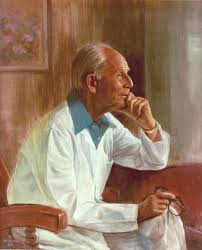
Dr. Hans Selye
Stress was first described by Dr. Hans Selye, who discovered that whenever animals or people are under pressure— physically, mentally, or emotionally— there is a common pattern of the physical breakdown in the body. He referred to this as the “Alarm Phase” of the stress response.
“Stress,” refers to the reaction of your body when you are confronted by a “stressor” — a demand (especially a threatening one) or a circumstance that requires you to act or change in some way to avoid, or overcome, this stressor in order to stay in balance. We all know that this phase is associated with emotional distress, bodily tension, physical illness, and poor performance, but this is only half the story.
The second half of the stress response is relaxation, during which time the friction-like damage from the chemicals released during the Alarm Phase is healed by the body. The two halves of the stress response were in balance with each other in that natural world of our ancestors; that was a world where stressors were brief, their source was easily identified by the five senses, and they could be quickly resolved by fight or flight. This two-phased response worked fine in that world – but it works against us in today’s world.
That’s because:
-
-
- our stressors assault us from every angle, there is no easily identified enemy,
- there is no way to fight, and nowhere to run
- the stressors are continuous, there is no time for the recovery phase
-
Stress is the non-specific response of your system (nerves, muscles, skin, etc.) to a perceived demand. Part of this response is the secretion of chemicals like cortisol (from the adrenal glands), which speed up certain processes and inhibit others. This is perfect for a short-term environmental challenge like the ones we were “designed” to face but not for today. The result is that as these chemicals build up, they become toxic, and begin to do damage physically, mentally, emotionally, and socially.
Certain brain functions (memory, patience, motivation) can be severely interfered with – in fact many organs and organ systems in the body can be severely damaged, the heart and immune system, for instance. Even the neurons of the nervous system itself can become sick and even die. To sustain health, we need to balance this catabolic stress reaction with a suitable period of anabolic relaxation (the relaxation response). Often this takes just a few minutes. But in cases of stress overload, or system breakdown (when we see collapse, diseases, illness, or dysfunction) taking a few days off, or an even longer retreat may be necessary.
When you see the stressors in your life as challenges rather than obstacles, and when you balance your stress by having adequate recovery time, the stress is actually a positive experience. We feel this when we play a hard-fought game of tennis or ping-pong, or when we watch a scary movie or are successful in reaching an important goal. But most of our stress is not of this “eustress” variety!
Stress Management Techniques
An old joke that medical students like to tell:
What is the difference between a “normal” person, a “psychotic”, and a “neurotic”?
Well, if you ask a normal, rational person how much is two plus two, they answer, “Four.”
If you go to a state hospital and ask a psychotic, who is out of touch with reality, he answers “17,” or “purple,” or “Elvis Presley.”
Ask a neurotic and he answers, “Four, but it really pisses me off!”
Of the three, the neurotic is the one who has the stress – the nonspecific reaction — basically because he is having difficulty accepting the reality of the world as it is at this moment. Stress is the internal mental and physical tension that arises when we get upset because things are not going the way we expected or wanted. In a very real sense, this is irrational, since the world cannot, at this moment, be any different from how it is. Being irritated, tense, anxious, or disappointed seldom helps — and usually hurts.
There are many different symptoms of stress. Whether the demands in our lives give rise to symptoms of anxiety or frustration, anger or depression, headache or stomach pain, procrastination or overwork, the real source of our symptoms is the chemical reaction of our nervous system to the inner conflict triggered by a perceived demand. There would be no real problem if such situations occurred rarely, and for short periods of time. Unfortunately, in our culture, the demands we experience are non-stop and very persistent. The stress builds up within us, and the chemicals of stress cause dysfunction, tissue breakdown, and the resulting illnesses, addictions, and emotional distress we are so aware of.
Dr. Miller has integrated a number of effective techniques to help enable you to do this, including deep relaxation, meditation, self-hypnosis, and guided imagery. All these can help you attain the peaceful states of serenity and stress relief. To learn more about Dr. Miller’s self-healing programs, visit our online store.
Stress Management Programs
-
Stress Fitness (Download)
$17.98 -
-
-
Letting Go Of Stress (CD or Download)
$14.98 – $24.98 -
-
Abolish Anxiety (Download)
$17.98